.png)
What to Wear Skiing or Snowboarding for the First Time
One of the biggest worries for first-time skiers and snowboarders is simple:
“What do I actually wear?”

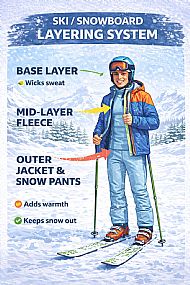
Getting your clothing right can be the difference between a great first day on the slopes and a very cold, uncomfortable one. The good news? You don’t need to overthink it — you just need to layer correctly.
Think of getting dressed for skiing like peeling an onion… but in reverse.
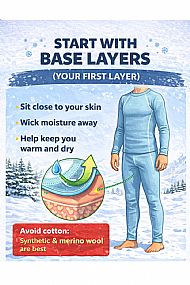
Start With Base Layers (Your First Layer)
You start the day in your everyday underwear, but over the top of that, you’ll wear base layers.
Base layers:
- Sit close to your skin
- Wick moisture away
- Help keep you warm and dry
This is important because beginners often work harder than they expect—getting up, falling over, and standing back up. You will sweat, and base layers stop that sweat from making you cold later.
Put base-layer bottoms over your socks, and ensure the socks are pulled up smoothly to your legs.
Avoid cotton if you can. Synthetic or merino wool base layers are best.
Socks: Don’t Get This One Wrong
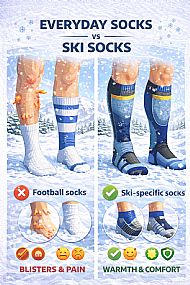
If there is one thing not to cheap out on, it’s socks.
Ski/board socks are absolutely crucial for comfort.
After a full day in boots, your legs can feel like they’ve been put in plaster. The wrong socks make this much worse.
🚫 Do not wear everyday socks
🚫 Do not wear football socks
🚫 Do not wear thick socks layered on top of each other
A true story
When I was a chalet host, a young boy turned up wearing football socks. By the end of his first day skiing, the pattern of the socks had turned into tiny blisters all over his legs.
I had to tell his dad, who then had to buy ski socks in the resort, at twice the price they would have been back home. Dad wasn’t happy… but the kid was much more comfortable the next day.
Comfort is key. Always buy proper ski/board socks.
Mid-Layers: Easy to Add, Easy to Remove
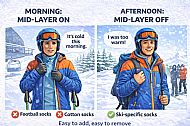
Your mid-layer is usually a thin fleece.
This is the layer you might:
- Wear first thing in the morning
- Take off halfway through the day
- Carry in a small backpack just in case
Beginners often get hot and bothered from getting up and down all day, so having something you can remove easily is a big plus.
Even if you don’t wear it all day, bring one with you.
Outerwear: Jacket & Snow Pants (Salopettes)
Your outer layer protects you from snow, wind, and moisture.
Jacket
Your ski or snowboard jacket:
- Doesn’t need to be 100% waterproof
- Must be water-resistant or snow-resistant
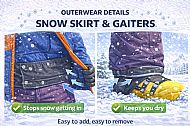
- Should have a snow skirt inside to stop snow from getting up your back
Snow pants / Salopettes
You might know them as snow pants, but the proper name is salopettes (from France).
Important things to check:
- Water-resistant
- Comfortable fit
- Inner gaiter that goes over your boots
This means the only thing inside your boots is:
✔️ Your feet
✔️ Your socks
Can I Wear Jeans?
Short answer: No.
Jeans are made of cotton. Cotton absorbs water. Once wet, they stay wet — just like on a rainy day at home, but colder.
Jeans on the slopes = cold, wet, miserable.
Protective Gear: Worth It for Beginners
As mentioned in Skiing vs Snowboarding for Beginners: Is It Hard?
- Crash pad shorts are highly recommended for skiing and snowboarding
- Snowboarders should wear wrist guards that fit under gloves
They don’t stop you from falling — but they make landing a lot softer.
Do I Need a Helmet?
Yes. Absolutely.
If you’re booking a ski or snowboard package with lessons, the helmet is usually included in the price.
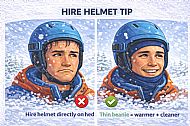
Top tip for hire helmets
Wear a thin beanie underneath.
Remember… a lot of people wore that helmet before you. Sweaty helmets aren’t fun.
Goggles: Non-Negotiable
Goggles are essential.
Why You Need Google:
- Protect your eyes from wind and snow
- Shield you from the sun at high altitude
The sun is much stronger in the mountains, reflecting off bright white snow like a massive mirror. Without goggles, you risk snow blindness.
Snow blindness feels like:
- A nasty flu
- Plus a hangover
- …at the same time.
It happens when a thin layer of skin burns off your eyeball — not fun.
What to Look for When Buying Goggles (Very Important)
Not all goggles are the same, and this is where a lot of beginners get caught out.
1️⃣ Tinted Lenses Are a Must
Always make sure your goggles have tinted lenses, not clear ones.
- Reduce glare from the snow
- Protect your eyes from intense mountain sun
- Help you see terrain more clearly
Clear lenses are not designed for skiing or snowboarding in the mountains.
2️⃣ Double Lens (To Stop Fogging)
This one is critical.
Make sure your goggles are double-lens.
How to check:
- Gently pinch the lens
- You should feel two separate layers
Think of it like double glazing in windows — it creates a barrier that helps stop misting and fogging.
🚫 Single-lens goggles fog up much faster
🚫 Once they mist, they’re a nightmare to clear
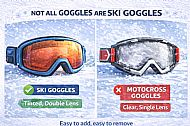
Double-lens glasses provide clearer vision, especially for beginners who frequently stop and start.
I was once in TK Maxx, and two women were looking at goggles. They were saying: “Oh yeah, these appear okay…” I looked over — and they were holding clear-lens goggles. They weren’t ski goggles at all. They were motocross goggles.
So I turned around and explained:
- They need tinted lenses
- They should be double-lens
- They need goggles designed for skiing and snowboarding
They were so thankful.
Can I Wear Sunglasses Instead?
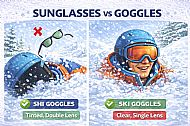
I don’t recommend sunglasses for skiing or snowboarding.
Why?
- Face plants happen
- Glasses break easily
- Expensive mistake
Sunglasses are perfect for après ski, though — sitting at the bar, drink in hand, looking out at the mountains. Yes, it really can be that sunny.
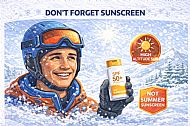
Sunscreen: Yes, Even in Winter
You’re high up, closer to the sun, surrounded by reflective snow.
Use at least twice a day:
- High-altitude sunscreen
- Designed for skiing and snowboarding
🚫 Don’t use summer sun cream
Water-based creams can freeze on your face.
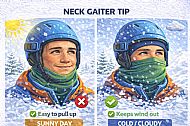
Neck Gaiter / Snood: Small but Mighty
A neck gaiter (or snood — call it what you like) is a great idea.
- Keeps your neck warm
- Can be pulled up over your chin
- Helmet strap over neck gaiter
Even on sunny days, keep it in your pocket.
I once made the mistake in New Zealand — sunny at the bottom, freezing in the clouds at the top. Lesson learned.
Gloves: Skiers vs Snowboarders
Skiers
You don’t need top-end gloves.
Look for:
- Thermal
- Quick-drying
- Comfortable
They’ll often dry while you’re having lunch.
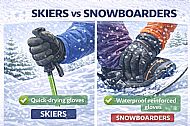
Snowboarders
Gloves or Mitts are part of your equipment.
You’ll:
- Touch the snow a lot
- Sit down often
- Adjust bindings (the parts that connect your boots to the board)
- We recommend Mitts more than Gloves, as Mitts will protect your fingers.
Look for:
- 100% waterproof
- Breathable
- Strong material (leather or reinforced palms)
- Make sure your wrist guards fit under gloves
Buy these from a proper snowboard shop — they’ll help you choose the right pair.
Après-Ski Boots: What to Wear Off the Slopes
Once your ski or snowboard day is over, you’ll want to get out of your boots as quickly as possible.
That’s where après-ski boots come in.
“Après” simply means after, so après-ski boots are what you wear after skiing & snowboarding — for walking around the resort, heading to dinner, or enjoying après-ski drinks.
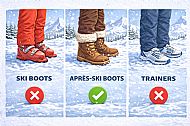
Don’t Wear Your Normal Trainers
This is a really common mistake.
Your everyday trainers are not designed for snow.
- The rubber soles on trainers are different
- They don’t grip well on snow or ice
- They get wet and cold very quickly
Snow and ice need a proper winter sole, not the same rubber you’d walk around town in.
Why Après Boots Are Better
Some hire shops will require you to return the boots at the end of the day, including snowboard boots (do not use snowboard boots to walk around; it's not cool), so make sure you have Après Boots with you.
- Have thicker, grippier soles
- Are designed for snow and slush
- Keep your feet warm and dry
- It is much safer to walk around in
They’re not for skiing — just for comfort and safety once the skis come off.
Think of them more like warm slippers you can walk outside in.
What About Walking Boots?
Standard walking boots are ideal.
- They can be stiff
- Not always insulated for cold snow
- Can be designed for icy resort paths
Stick with proper après-ski boots if you can.
Personally, I usually go one size bigger in après boots. Check walking boots before wearing thicker socks.
After a full day in boots, your feet appreciate a bit of extra room.
Comfort is everything at this point of the day.
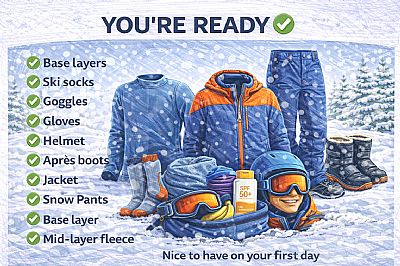
Why This “You’re Ready” Checklist Matters
When you’re heading to the shops for your first ski or snowboard trip, it’s easy to feel like you’re forgetting something. This checklist is here to take that pressure away.
If you’ve got the items above, you’re properly prepared. You’ll be warm, dry, protected, and comfortable — so you can focus on learning and enjoying yourself, not on worrying about your gear.
You don’t need the most expensive gear or the latest brands. You just need the right basics, layered correctly. With this checklist ticked off, you can step onto the snow knowing you’ve done everything right.
Now all that’s left to do is get out there, give it a go, and enjoy your first day on the mountain.
Boots: Don’t Buy Them Yet
For your first trip:
- Do not buy boots online
- Just use the hire package
Boots are included, and while they won’t be perfect, they’re fine for beginners.
Once you’ve done:
- Two or three holidays
- And know you’re committed
Then it’s worth investing in your own boots for long-term comfort.
You’re not there yet — and that’s OK.
Moral of the Story
👉 Go to a professional ski or snowboard shop.
- The staff actually know what they’re selling
- You’ll get the right advice
- You won’t accidentally buy the wrong equipment
Support your local ski and snowboard shop — it will save you money, discomfort, and frustration on the mountain.
